

A deep dive on the growth efficacy of founder conviction
Season 10, Issue 9: A deep dive for an emerging brand, Sublime App
📬In this issue:
A brand I’ve been frothing over
How vision, conviction, and founder-lead growth is working for Sublime
What growth looks like for the next wave of SaaS and what B2B can take away from this
This week’s issue might get cut off by your inbox so best to jump to the web version now!
Salutations, Mehketeer,
Come on a quick ride with me:
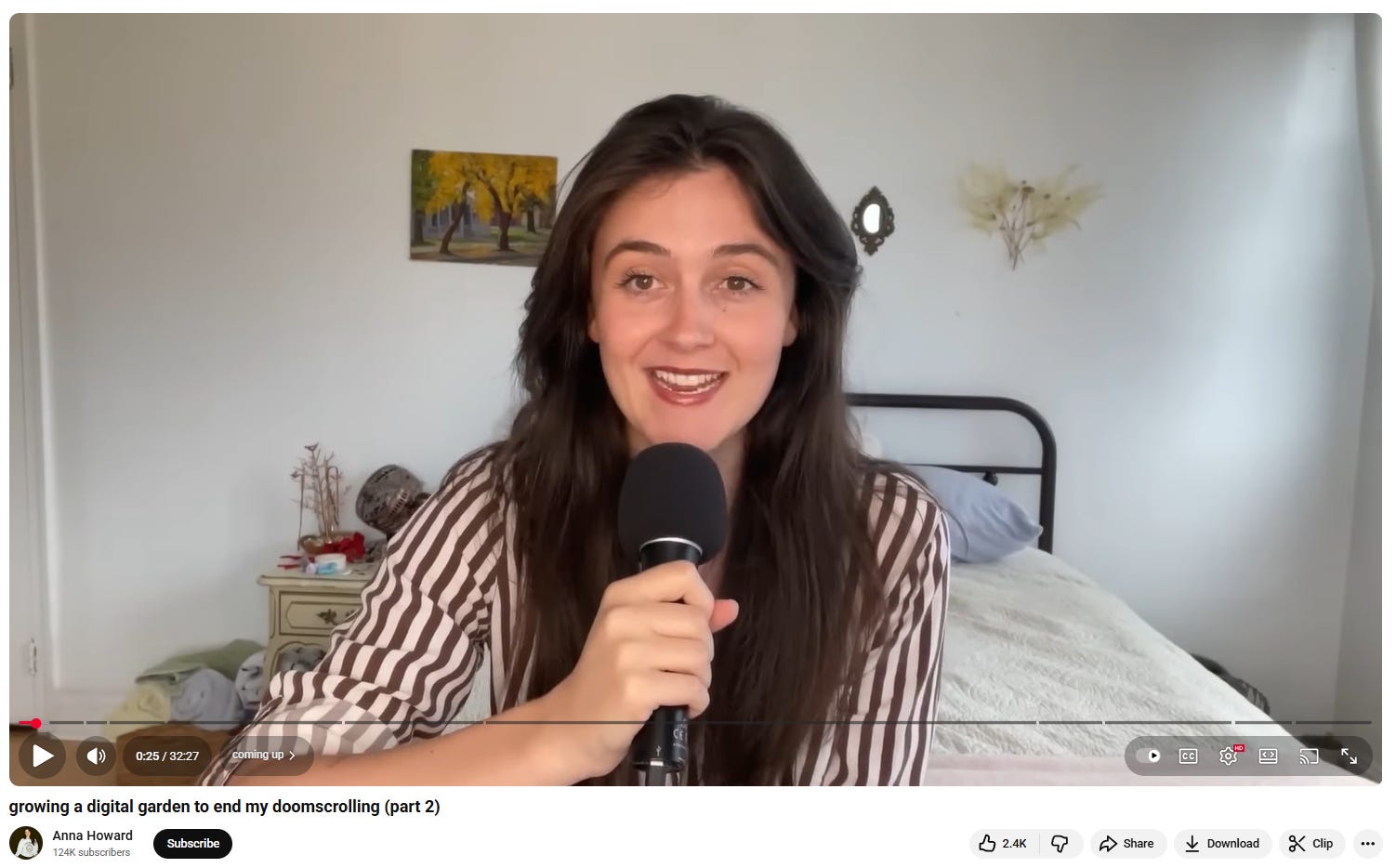
Earlier this year I got a projector and replaced listening to podcasts in headphones while I clean with video podcasts on YouTube on my wall while I clean. This lead to me sstumbling onto this episode of Wild Geese, a podcast which I’d never heard of. At the time of this episode’s release, the account had about 30-35,000 subscribers. It now has 124,000.
In it, the host, Anna Howard, sits in her bedroom, holding a microphone, talking about building a digital garden to avoid doomscrolling. She mentions an app called Sublime, and it grabs my attention enough that I make a mental note and I checked out the website.
I liked what I saw from a web design and branding perspective, and bookmarked the site. I kept coming back to it every now and then, and actually signed up only at the beginning of September.
Since then, I’ve watched this brand go from strength to strength, so let’s take a deeper dive into it!
A quick overview of Sublime
What is it
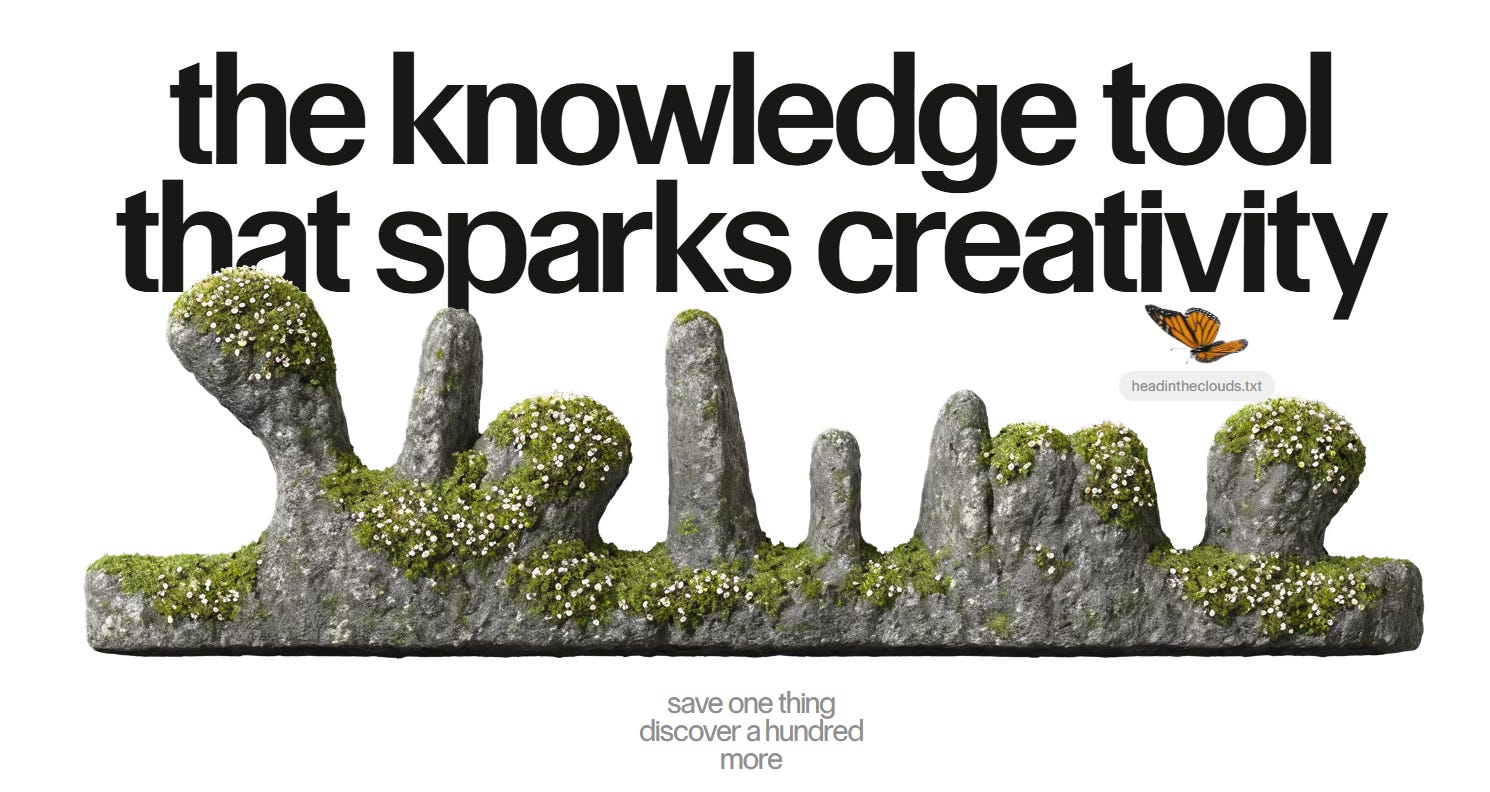
It’s kind of like pintrest where you save things (quotes, pictures, links, etc.) in ‘libraries’ (AKA groupings that you also make), and then you can view related ideas to whatever you saved. For example, if I saved a quote from a book, it might surface more quotes from the same book, more quotes from the same author, or quotes from a book in the bibliography of the book I’m reading.
Sublime also looks into other people’s libraries to surface thematically related ideas, in a “people also saved” kind of way.
Who made it for how much
Founded by Sari Azout, LinkedIn currently says it has 2-10 employees. This interview says they raised $2.4 million USD pre-seed.
What’s the timeline
Founded as “Startupy” in 2021, rebranded to Sublime in 2023, went into private beta for 18 months and launched publicly on April 11, 2025. When they came out of beta, they said they already had 1,000 paying members. At the lowest price point of $75 a year, this would give them $75,000 ARR minimum.
The public release: Channels and growth tactics
At the time of writing this (December 7, 2025 [a-ha! proof I wrote this before deadline]), Sublime has:
3,177 Instagram followers (first post Jan 2023)
9,047 X followers (Account opened in 2020, name changed to Sublime in June 2023), and 23,900 on Azout’s personal account
2,000 followers on LinkedIn and 6,295 for Azout’s personal account
63,000 Substack subscribers on the The Sublime account, and 79,000 on Sari Azout’s personal account. She started posting in May of 2019.
1,220 subscribers on YouTube (the top performing video has 5k views and features Seth Godin, it has surprisingly high production value despite the low numbers, so they must see this as a worthwhile investment)
They run a public Slack account, with 1,800 members
There’s an interesting thing happening here. Azout’s personal brand is doing a lot of heavy lifting. She had a presence before starting Sublime (in all its iterations) and she also worked in some capacity with VC, which would have come with a fairly well developed personal network.
Let’s take a look at some of the launch tactics:
Substack
Let me start with a quote from Azout:
the first 1,000 paying customers came straight from Substack (link)
Now that’s interesting.
Azout’s been writing on Substack since 2019, and Sublime the brand has continued and expanded upon that. They started printing their long form content and publishing it under a zine series called Whoa, and very recently as part of that part of the business releases a candle which was featured on Lenny’s Christmas gifts wrap up — an entry point to the Sublime brand for a cool 1 million + people.

Here’s some more direct from Azout on publishing long form content:
When it comes to marketing, our main focus has been on writing. The more we write, share, and build in public, the more people are drawn to our work. That’s one thing we do consistently.
We also showcase how others use Sublime. We spend a lot of time with our community, learning how they’re using the tool, and sharing their stories. There has definitely been a lot of organic growth out of it. (link)
(More on community later)
I’d say we produce the editorial work for two reasons.
First, our team is just a bunch of people obsessed with interesting ideas, so we genuinely enjoy making zines and publishing our own original editorial.
It’s also an effective acquisition channel. If you look at our revenue charts, the months when we launched the zines were the same our revenue grew. People share the zines, so more people discover Sublime, and more people become paying users.
Also, they’re structured to be cost-neutral. In fact, they’re revenue-positive. If it costs us $6,000 or $7,000 to make them and we bring in $15,000, then it’s essentially a customer acquisition funnel we get paid for. (link)
If you’re a long-time Mehketeer you know I’ve been thinking of printing seasons of Mehdeeka so this is actually a really interesting piece of information for me personally.
Reddit
The public release was shared on several subreddits, including r/SaaS, r/productivityapps, and r/PKMS:
We’ve been building slowly and quietly in beta for the last 18mo, with zero ad spend and no growth hacks. Just vibes, word of mouth, and a community of thoughtful people. …
Today, over 1,100 people pay for it and 15,000 use it for free.
Source: This reddit post
How to break into Reddit communities is something a lot of marketing teams are asking right now. Here’s five things Sublime did really well:
The poster (u/alexd231232) is an actual proper redditor, with an account history, active in more subs than just the ones that are promoting Sublime, and they don’t come across as a company account at all
They picked subreddits strategically, at first when I saw they posted in r/raycastapp I was confused, but it was promoting that they have a Raycast extension, so it’s still relevant
Every post promoting Sublime in a different subreddit was unique, not copy/pasted
They’re not jumping on every thread that mentions them to self-promote, there’s plenty of Reddit threads where Sublime is in the original post, but none of the comments are from Sublime employees
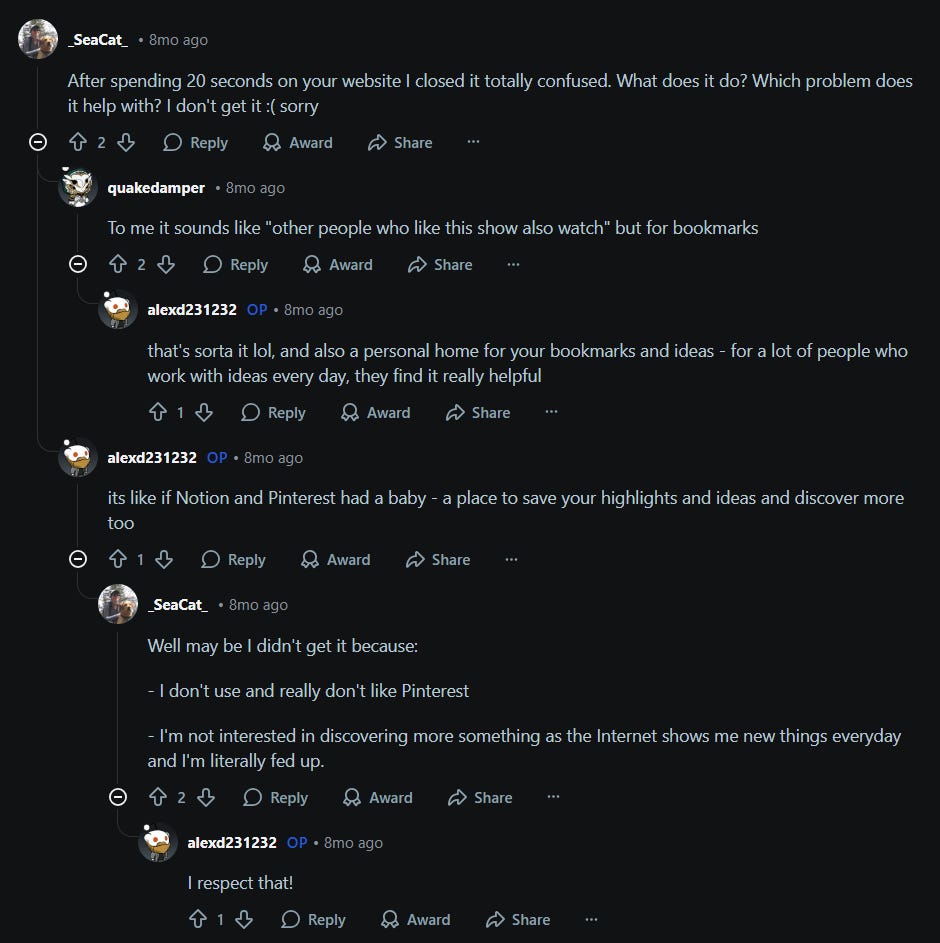
They engage with the comment threads, even the negative ones (see screenshot below)
Azout also has a reddit account used to promote Sublime though far less frequently than Alex.
Community
Once again, coming in hot with some quotes from Azout. This first one is in response to a Redditor who questioned the difference between Sublime and its competitors:
The differences between these tools come down to nuances and personal preferences. But at the end of the day, we feel very strongly that our main differentiator is the community, which is why we are growing it at the speed of trust. (link)
In Sublime’s case, community comes down to their Slack channel, their Substack subscribers, and Azout’s network. They promote the members of the community across Youtube and other social media channels with their “How I Sublime” series.

Having people feel like they’re contributing to the growth of something is a great way for them to become bought-in, loyal customers who stay for a long time. I actually wrote about this in a previous Mehdeeka in regards to working with sales teams:

we don’t really have a head of community who manages and measures how many people are active on Slack. (link)
One last quote from Azout on community. At the size they’re currently at, not having a head of community is fine. It’ll be interesting to see how they invest in this as time goes on. They’re held a few events in various places, including in Scandinavia — this opportunity came through a community member who offered the space, so the community is at that nice size where it’s not overwhelming.
Having some experience running a large-ish community with Generate, there’s such a fine balance between growing a community and a community getting too big and becoming noise.
Influencers
After being mentioned on Wild Geese, Sublime did eventually sponsor the podcast. In researching this piece, there were several “I heard this from X, who heard this from Y” type organic mentions of Sublime across podcasts, social media, and the like.
It’s really smart of Sublime to jump on these opportunities. The influencers/accounts might be small, but that also means it’s a cheap channel. And when influencers are justy starting to get their first sponsorships, their audience is more likely to cheer for them as a win rather than “ugh another ad.”
Founder branding, conviction, and cult leader speech patterns
Azout is building Sublime for herself, and she’s made that clear a number of times:
we need less people laboring away in their solo note-taking tools, more curators (like me) coming together to make their content searchable and available to others. (link)
With Sublime specifically, I don’t care if it’s part of the current hype cycle, because I’m a lifer in this. To me, it’s a journey about finding a home for my ideas. (link)
What I’m about to say I mean in a positive way but I can already tell it’s not going to come across that way so this is my disclaimer.
This level of conviction in what you’re building inherently comes with a level of delusion. You have to be a little bit crazy to be a founder. And this attracts customers.
I read a book called Cultish on the linguistics of cults and one point from the book comes back to me when I read these interviews with Azout. What a cult leader says is less important than how they say it. People get caught up in the flow, the momentum, and the drive that the founder is able to perform — because it is a performance.
And that’s what founder-lead growth is. It’s one person (with a hidden team behind them) going out to bat for the company. To have a level of unwavering conviction that people can respect, admire, and aspire to. That includes sharing negative things (failures, learnings, build in public style) and saying you’re still going no matter the obstacles.
The negative and failure lessons are not as prevalent in Azout’s style of marketing, but she doesn’t shy away from someone else saying something less than positive, and that adds to the sense of conviction.
The other day I saw this post from It’s Nice That about a Yonex campaign that focuses on the “mythology” of the sport. We’re watching Sublime/Azout build this mythology from a very early stage right now. Time will tell if it’s successful, but it’s interesting nonetheless.
What B2B can take away from this
Honestly? A lot. Founder-lead growth, developing personal brands for your execs, running social media through employee accounts — all of it is applicable to B2B.
If anything, company LinkedIn accounts aren’t worth you running. Treat them like a static website for directing traffic and being able to insert a link into your LinkedIn posts without getting punished by the algorithm. Invest in employee programs and incentives for posting, with an emphasis on execs.
Building their brand builds your acquisition channels.
Next week is the last Mehdeeka of Season 10
And then I’m taking a break over Christmas, but as you know I’ve already set a start date for Season 11 so I’m not gonna be taking a 4 month break again. I’m also happy to say I’ve made progress on my Shohei square from last week! Revisit that issue if you’re looking for things to do to look busy but aren’t actually work in the run up to Christmas:

See you one last time next week!
Kayla